

© Institut royal du Patrimoine artistique

© Musée Horta © Fondation Jean Delhaye
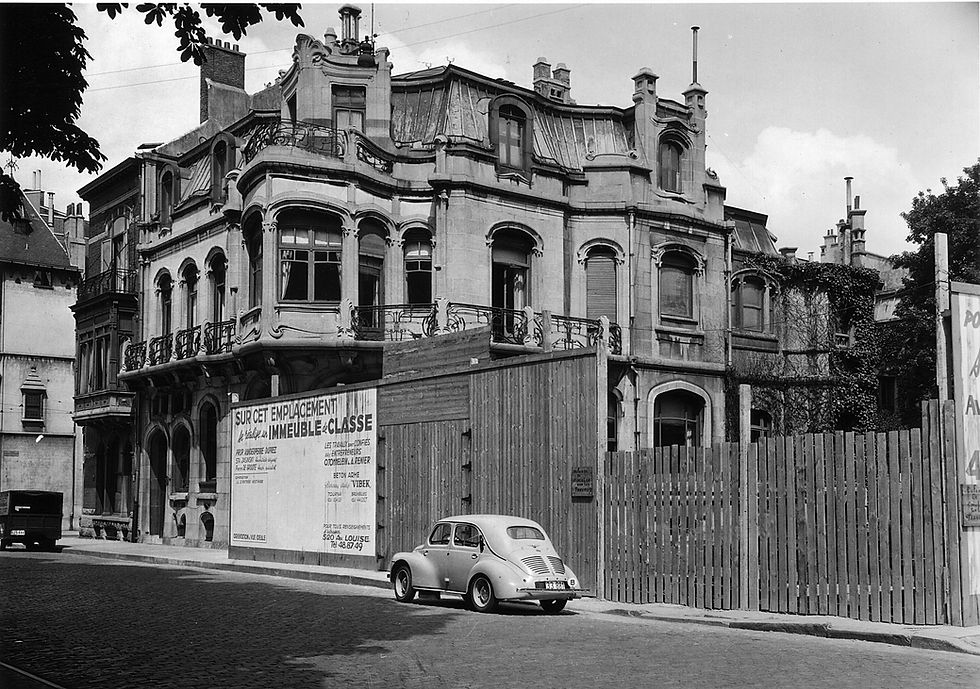
© Institut royal du Patrimoine artistique
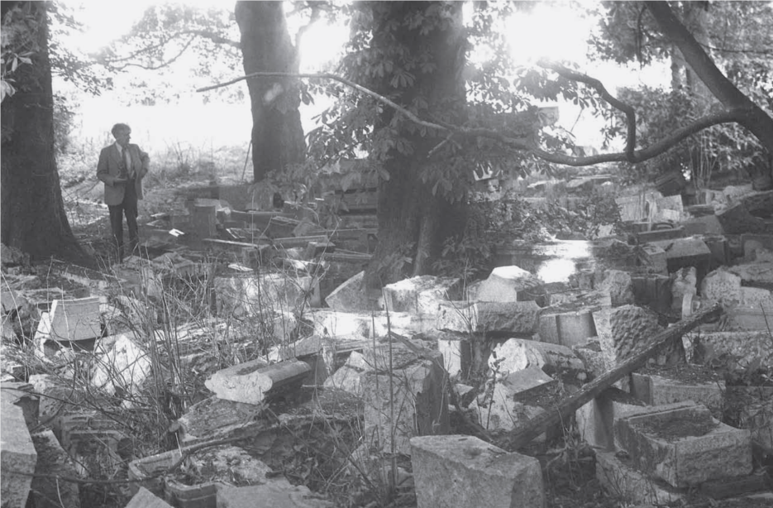
© Archives d’Architecture Moderne - AAM
© Centre de Documentationde l’Administration de l’Aménagement du Territoire et du Logement

© Cabinet Ans Persoons
Hôtel Aubecq is the name of a magnificent private mansion built between 1900 and 1904 along on Avenue Louise in Brussels, commissioned by the Walloon industrialist Octave AUBECQ, director of the “Émailleries et Tôleries Réunies” in Gosselies.
Hôtel Aubecq was not a hotel in the modern sense of the word. It was an exceptionally luxurious private residence, also designed as a prestigious setting for entertaining. The house was intended to welcome guests while reflecting and reinforcing the social standing of the Aubecq family.
The architect Victor HORTA designed this remarkable residence as a “total work of art”, in which the façades, interiors, furniture and even the decorative elements were conceived in the Art Nouveau style, which was highly innovative for its time.
In 1950, the building was demolished to make way for a modern twelve-storey apartment building. Thanks to the efforts of Julie HORTA and Jean DELHAYE, however, part of the façade was saved. Auguste BUISSERET, Minister Public Works, decided that the façade facing Avenue Louise should be carefully dismantled and its stones preserved, in the hope that it might one day be reconstructed.
Many years passed, and the stones gradually fell into neglect. Stored in a field, they slowly became surrounded by shrubs and trees. It was not until 1990 that the stones were laid out for the first time according to their original composition and a preliminary inventory was drawn up. Unfortunately, the stones subsequently fell into oblivion once again…
In 2001, following Belgium’s federalization process, the stones became the property of the Brussels-Capital Region. In 2009, architect Nicolas CREPLET, a specialist in the restoration of historic monuments, was commissioned to carry out the first comprehensive study aimed at reconstructing the façade.
This work resulted in an exhibition in 2010, giving the general public the opportunity to rediscover a façade that had not been seen for almost 60 years. The exhibition was a great success, and Hôtel Aubecq gained widespread recognition architecture enthusiasts.
Despite this success, no permanent solution was found, and the stones were once again placed in storage.
In 2025, the lease on the storage facility came to an end. This time, a permanent solution was sought for the stones. They will be given a prominent place within a new “centre of excellence for construction” in Berchem-Sainte-Agathe. The centre aims to train highly specialised professionals through advanced training programmes and continuous professional development. It highlights the remarkable skills and craftsmanship of the construction trades, focusing on themes such as renovation, restoration, circularity and the many disciplines associated with them.
The exact form in which the façade will eventually be displayed has yet to be decided. One thing, however, is certain: Hôtel Aubecq will serve an important educational and training purpose.
Thanks to the collaboration between URBAN (owner of the stones), Constructiv (client for the training centre) and Fast Forward Architects (architect of the training centre), the façade has once again — for the third time — been reconstructed inside one of the halls of this centre of excellence.
The purpose of this latest reconstruction is to explore how, on the one hand these elements can be given a meaningful role on the site itself, and on the one hand, contribute to specialized vocational education and training.
During this two-year period of study and reflection, the stones will be accessible to visitors. The general public will have the opportunity to discover why this façade remains such an extraordinary source of inspiration and continues to capture the imagination, more than 75 years after its demolition.